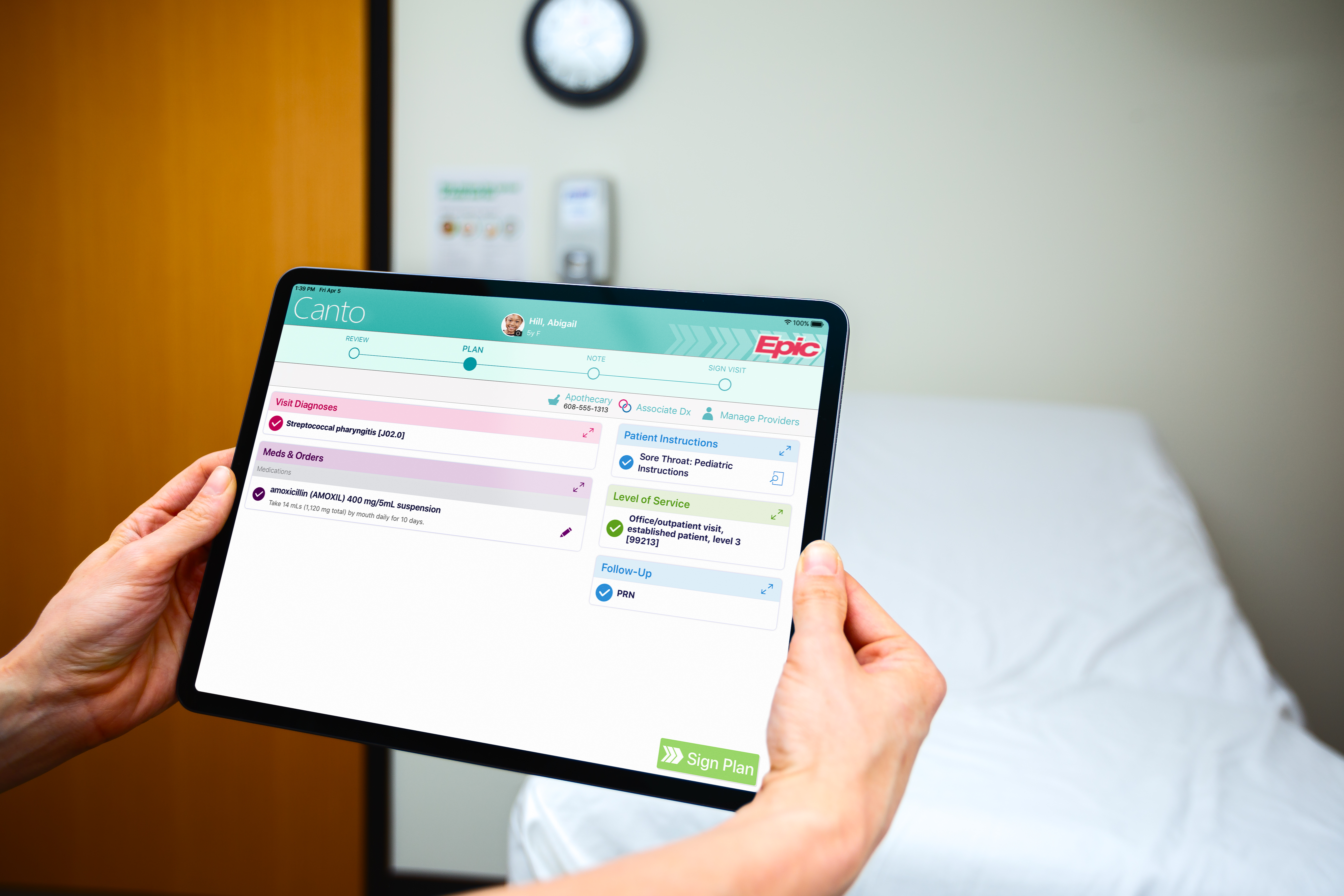

Apply your expertise in emerging and foundational technologies, like machine learning, natural language processing, and NoSQL databases to save lives and improve care for hundreds of millions of patients around the world.

From mobile apps for patients and doctors to back-end systems parsing billions of gigabytes of data in a heartbeat, collaborate with your coworkers on meaningful and algorithmically complex technical problems.

You can expect to have ownership of challenging projects right away. We don’t mean writing code from specs, either. You will be inventing software and given the responsibility of moving your code from idea to implementation.
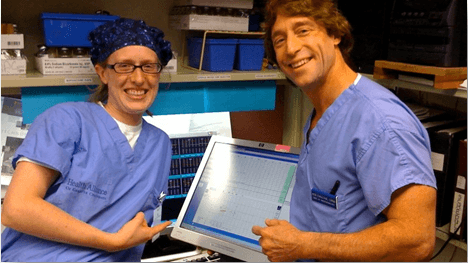
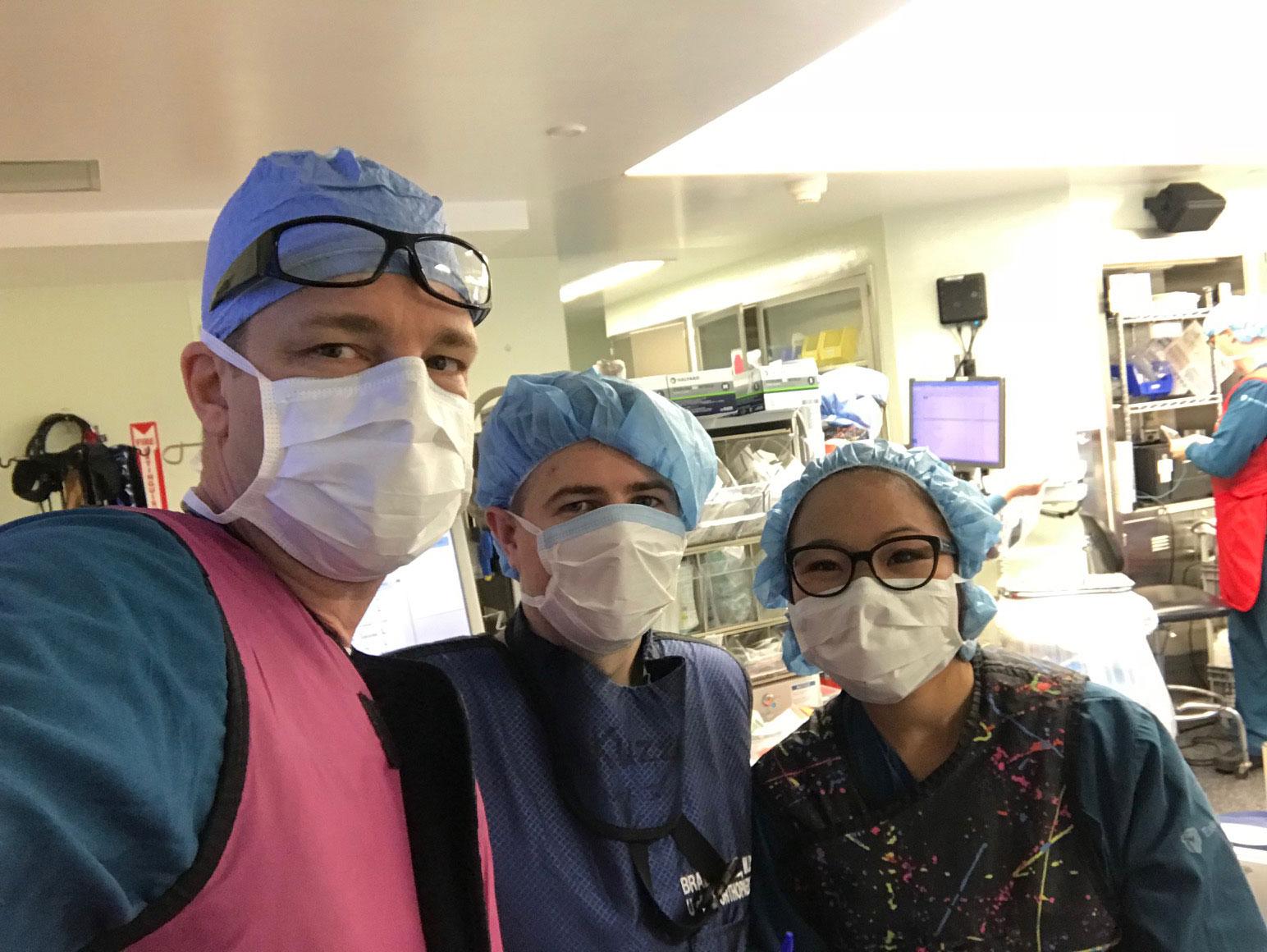
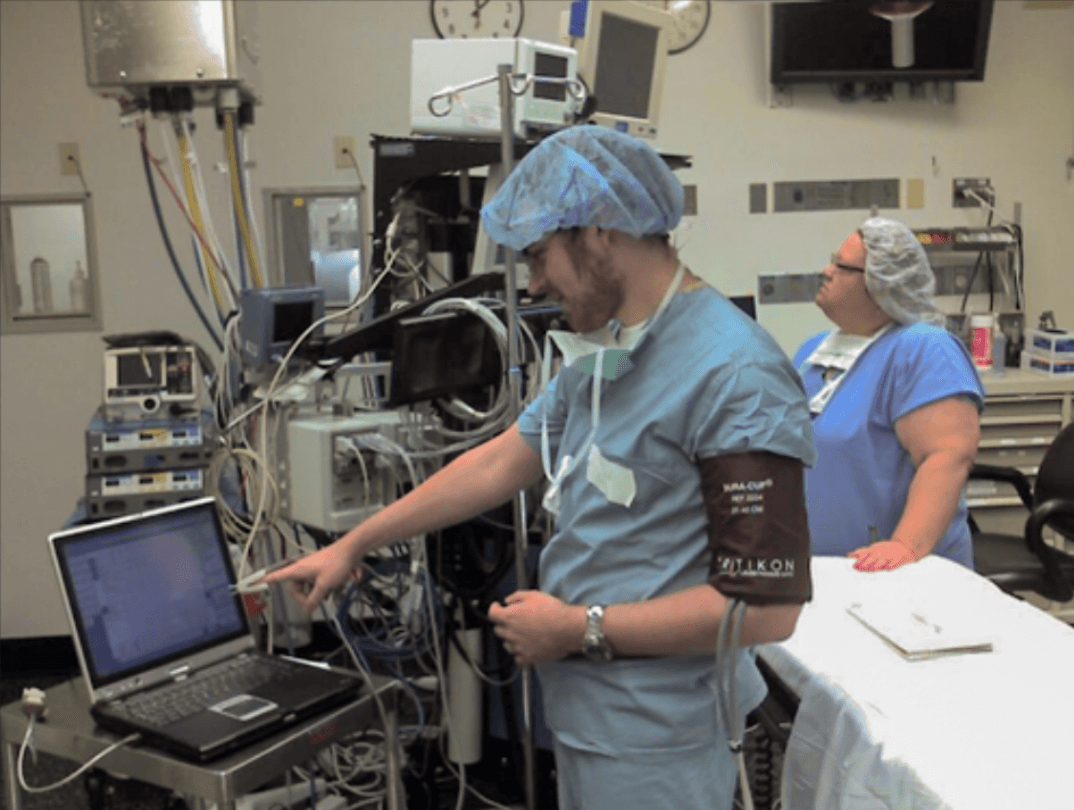
Before you write software, you need to understand the environment where it will be used. We’ll send you on trips to healthcare organizations to observe how they work. By seeing what they do, in the context in which they do it, the software you build will be more intuitive and easier for them to use.

Accurate diagnoses are key to better outcomes and lower costs. Diagnosis Checker uses AI and Cosmos—a dataset built with over 300 million anonymized patient records—to surface likely conditions based on similar past cases. As new info like labs or imaging rolls in, the differential updates in real time, helping clinicians make faster, clearer decisions.
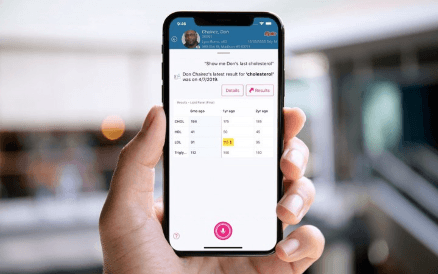
Best Care Choices for My Patient taps into Cosmos to show what’s worked for patients with similar conditions. By surfacing real-world outcome data right at the point of care, it helps clinicians make confident, personalized decisions that improve quality and consistency.
Epic’s Trust and Assurance Suite helps healthcare orgs safely deploy AI by evaluating model performance, fairness, and real-world fit. It ensures tools work across diverse populations and evolve with new standards—building clinician trust and aligning AI with local needs.
My favorite part of working for Epic is the independence that I have. When I start a new project, I get to be creative on the solution – which involves working directly with the clinicians who use the software, co-designing with other teams at Epic, and making decisions about the best technical approach to implement the solution. This independence grows my healthcare knowledge and makes me a better developer. When the project is done, nothing beats the feeling of seeing my development help clinicians and patients.
At Epic, developers take full ownership of both designing and building solutions, enabling deep understanding of the product and personal growth into being good developers who understand the why behind decisions. During my time at Epic, I’ve worked extensively on international development and over time have become one of the go-to subject matter experts for our European customers.With a mission rooted in improving healthcare, developers see the real-world impact of their work through firsthand experience shadowing clinicians to enhance patient care.
What I love most about working at Epic is building software that directly improves the lives of patients, doctors, and clinical staff. The problems I’m solving are complex and meaningful, and I’m trusted to fully own my projects, from brainstorming with end users through design, development, and release. That combination of meaningful impact and ownership is what makes each day exciting.
At Epic I don’t just have the opportunity to make decisions that will steer the industry: I am expected to. Prior to Epic, my bosses made all of the big decisions, and they told me what code to write. I didn’t feel ownership over my product, and my impact was limited. During my time at Epic I have started new products from scratch, rebuilt entire products from the ground up to keep up with an ever-evolving industry, and I have done so with smartest and hardest-working coworkers I have ever had. I get to solve real problems, for real people, and I take pride knowing that that my code is saving lives.

Katie started development on her first project, which helps patients and physicians interpret cancer screenings by identifying the location a colonoscopy image was taken.

Rob released his first enhancement project, which improved UI and navigation for anesthesiologists.

Julie became a team lead and started managing three team members.

Dennis became the foremost international home care and mobile expert on his team of 40+ software developers.

Sean became the End of Life initiative lead, where he led the effort to create better tools to capture patients' end of life wishes.

Ronnie became the product lead for our surgical software and now manages a team of 70+ developers.

Everett laid the framework for our Telehealth Everywhere network, allowing patients to have video visits with providers anywhere.

Jordan moved to his fifth software development team.
Andrew became the division manager for our Departments and Specialties software, with 10 products reporting up to him.

Projects are usually owned by a single developer, but larger projects that require more development and coordination can be split among multiple developers or even multiple teams. We use whichever project methodology makes the most sense, be it V-model, Agile, incremental, iterative, or others. We release updates to our software quarterly.
.svg)
You’ll travel for three or four immersion trips during your first year, so you can learn how our users use our software. After that, you can expect around two trips per year. You can travel more if you’d like—we're always looking for people to help out when hospitals switch over to Epic, and you’ll have opportunities to go to industry conferences, such as Google I/O.
.svg)
We use the best tools for the job and reevaluate these on a regular basis. Currently, our teams use a combination of languages and platforms including but not limited to .NET/C#, Typescript/Javascript, Swift/Objective C, Java/Kotlin, Caché, and React.